The worst firewood to burn: what to keep out of your fireplace and why
Most firewood advice is about the best wood. This is the other list: what to keep out of the fireplace, from the genuinely dangerous to the merely disappointing, and the one mistake that turns good wood into bad.

I get asked about the best firewood every week. Nobody asks about the worst, and that is the list that keeps people out of trouble. Here it is, from the wood that will poison a room down to the wood that will just ruin an evening.
Short answer
Never burn treated, painted, glued, or salt-soaked wood. Do not burn wood that is wet inside, moldy, or rotten. Do not burn softwood as your main fuel. And remember that the worst firewood of all is good hardwood that was never dried: wet oak is worse than dry poplar.
Dangerous: never burn these
- Pressure-treated lumber. Deck boards, fence posts, landscape timbers. The preservatives release toxic compounds when burned.
- Painted, stained, or varnished wood. Old trim, furniture, anything with a finish. Same problem.
- Plywood, particleboard, MDF, pallets of unknown origin. Glues and resins, and pallets are often chemically treated for shipping.
- Driftwood. Salt-soaked wood releases corrosive compounds that are bad to breathe and hard on a chimney.
- Trash, cardboard, glossy paper. Inks and coatings, plus a flash of heat that can ignite creosote in the flue.
Bad for the chimney: wet, moldy, rotten
Green or wet wood is the most common bad firewood by a mile. It is often a fine species that simply was not dried. Wet wood spends its energy boiling water, smokes heavily, and sends that smoke up a cool flue where it condenses as creosote. That is how chimney fires start. If a log hisses, bubbles at the ends, or is heavy for its size, it is wet. The creosote guide covers what happens next.
Moldy or fermented wood is wood that sat damp under a tarp. It smells sour, burns poorly, and brings spores inside. Rotten, punky wood has lost most of its energy to decay; it crumbles, burns cool, and smolders.
Disappointing: softwood as fuel
Pine, spruce, fir, cedar. They light instantly, which is why they make great kindling, and then they burn fast, smoky, and resinous, leaving more creosote than hardwood. A softwood log on a hardwood fire is harmless. A winter of softwood is a dirty chimney and a lot of trips to the woodpile. The best firewood guide ranks the hardwoods to use instead.
Not bad, just light: poplar, willow, basswood, sycamore
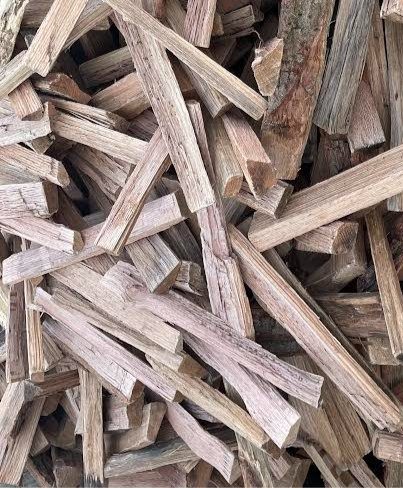
These are hardwoods that burn fast with modest heat. They are not dangerous and not dirty when dry; they are just quick. Poplar earns its place in our mixed blend because it catches fast and gets the oak going. As the only wood in the pile, it means a lot of reloading.
Species that need a note
- Black locust is superb firewood but throws sparks. Use a screen in an open fireplace.
- Green red oak smells sour and will not burn. Dry red oak is excellent. The difference is a year or a kiln.
- Poison ivy vines wrapped on a log, or any wood from an unknown shrub: cut them off. The smoke from poison ivy is genuinely harmful.
The mistake that makes good wood bad
Almost every "bad firewood" complaint I hear is about oak, maple, or hickory that was sold as seasoned and was not. Species gets you most of the way. Dryness gets you the rest, and it is the part you cannot see. Buy wood that was dried in a kiln and tested, or test it yourself with a meter before you pay. Our Mixed Hardwoods and 100% Oak are kiln-dried, and the kiln-dried vs seasoned guide explains why that matters more than the species on the label.
Frequently asked questions
What is the worst firewood to burn?
Anything treated, painted, or glued: pressure-treated lumber, plywood, pallets of unknown origin, and painted trim release toxic smoke. After that, green wood of any species, driftwood, moldy wood, and softwoods like pine used as the main fuel.
Can you burn pine in a fireplace?
As kindling, yes. As your fuel, no: pine lights fast, burns fast and smoky, and leaves more creosote than hardwood. A pine log now and then will not hurt; a winter of pine will.
Is it bad to burn wet wood?
Yes. Wet wood wastes its heat boiling water, smokes heavily, and coats the chimney with creosote, which is what causes chimney fires. If a log hisses or bubbles at the ends, it is too wet.
Why can you not burn pressure-treated wood?
It is treated with chemical preservatives that release toxic compounds when burned, into your room and your neighborhood. The same goes for painted, stained, or glued wood. It is not a firewood question; it is a poison question.
Is poplar bad firewood?
Not bad, just light: it burns fast with modest heat. It is useful for shoulder-season fires and for getting dense wood going. In our blend it does exactly that job.
Clark started splitting and selling firewood on his family farm in Upperville, Virginia at age 11. Today Clark's Firewood delivers premium kiln-dried hardwood to homes across Virginia, Washington DC, Maryland, and North Carolina, and Clark personally guarantees every order.