What is kiln-dried firewood? How it is made, what it costs, and when it is worth it
One of the most-searched firewood questions is whether kiln-dried firewood is even a real thing. It is. Here is how it is made, what comes out of the kiln, how it compares to seasoned wood and store bundles, and who should buy it.

When I switched my business to kiln-dried only, more than one customer asked if that was a marketing term. Fair question; "seasoned" has been stretched to mean almost anything. Kiln-dried is not stretchable. It describes a specific process with a measurable result. Here is what it is.
Short answer
Kiln-dried firewood is split hardwood that has been dried in a heated kiln for days, bringing it to a consistently low moisture level and killing any insects or mold inside. It lights on the first match, burns hot and clean, builds less creosote, and is safe to store indoors. It costs more than seasoned wood per stack and usually less per fire that actually burns.
How it is made
- Cut and split. Hardwood logs are cut to length (16 inches for us) and split to fireplace size. Splitting first matters: wood dries through the exposed faces, not through bark.
- Loaded. The splits go on pallets or into crates so air can move around every piece.
- Into the kiln. A sealed chamber with a large heat source (often a wood-fired boiler burning the scraps) and fans. The kiln runs for days at high temperature with controlled airflow, pulling moisture out of the core of each split, not just the surface.
- Tested. Pieces are split and checked with a moisture meter before the batch ships. If it is not at target, it goes back in.
The heat does something air-drying cannot promise: held long enough, it kills insects, larvae, eggs, and mold spores throughout the wood. That is why kiln-dried firewood can sit in a garage or next to the fireplace, and why parks that ban outside wood often make an exception for heat-treated firewood.
What comes out
- Consistently dry. Every piece, every batch, well under the 20 percent moisture that marks good firewood. Seasoned wood gets there sometimes.
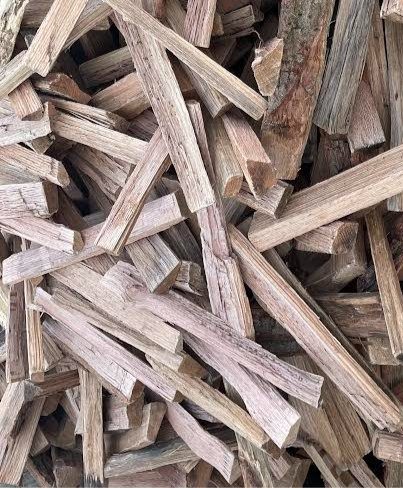
- Light and pale. Dry wood is noticeably lighter than green wood of the same size, and the ends show cracks radiating from the center.
- Clean. No bark litter crawling with beetles, no mold, no sour smell.
- Ready today. It burns the day it arrives. No stacking it for a year.
Kiln-dried vs seasoned vs the bundle at the store
| Kiln-dried | Seasoned | Store bundle | |
|---|---|---|---|
| How it dried | Days in a kiln | A year outdoors, if done right | Varies, often damp in the wrap |
| Moisture | Low, consistent | Around 20%, varies widely | Unknown |
| Insects and mold | Killed by heat | Present | Sometimes |
| Indoor storage | Safe | Not recommended | Short term |
| Lighting | First match | Good when dry | Hit or miss |
| Price per cubic foot | Higher | Lower | Highest by far |
The full comparison goes deeper on the first two columns, and the bundle math guide on the third.
Who should buy it
Anyone who burns in a fireplace or stove and wants every fire to light and burn clean. Anyone storing wood in a garage, mudroom, or basement. Anyone with a chimney they would like to keep clean. Anyone who has fought a wet cord through a February. If you have a woodlot, a splitter, and a year, seasoning your own is a fine way to heat; the home kiln guide covers how far a backyard setup can go.
What ours is
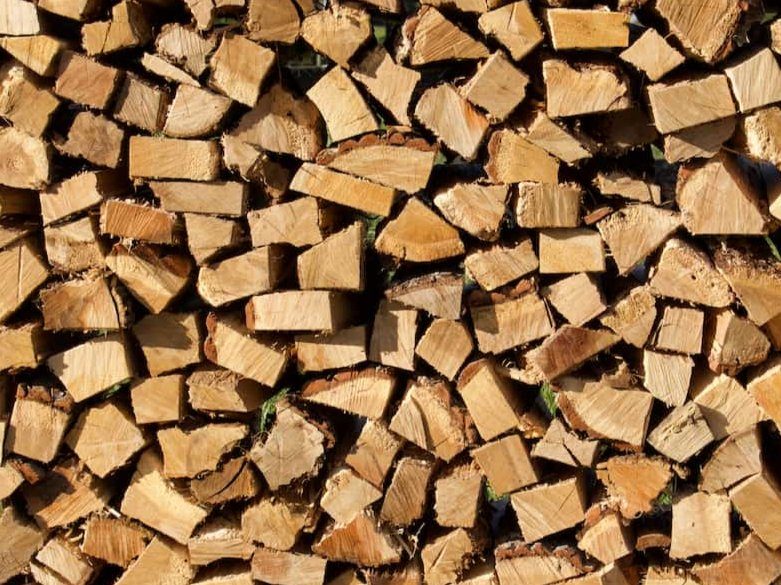
Hand-selected Virginia hardwood, kiln-dried, split to consistent 16 inch pieces, in two lines: Mixed Hardwoods (cherry, hickory, maple, red and white oak, poplar, locust, ash) from $140, and 100% Oak from $175, delivered and stacked across Virginia, DC, Maryland, and North Carolina. Every order is personally guaranteed by me.
Frequently asked questions
Is there such a thing as kiln-dried firewood?
Yes. It is split firewood that has been dried in a heated kiln for days instead of air-dried outdoors for a year. The result is consistently low moisture, no insects or mold, and wood that lights on the first match. It is what we sell, and what most premium firewood companies sell.
How is kiln-dried firewood made?
Logs are cut and split to size, loaded on pallets or in crates, and rolled into a sealed kiln with a large heat source and fans. The kiln runs for days at high temperature with controlled airflow until the wood reaches its target moisture, then the batch is tested and shipped.
How dry is kiln-dried firewood?
Well below the 20 percent moisture generally considered the threshold for good firewood, and consistent from piece to piece. Seasoned wood lands around 20 percent when done right and varies widely when not.
Is kiln-dried firewood better than seasoned?
For most homes, yes: it lights faster, burns hotter with less smoke, builds less creosote, and can be stored indoors because the kiln kills insects and mold. Properly seasoned wood can burn nearly as well, but you have to verify it yourself every time.
How much does kiln-dried firewood cost?
From us, $140 for a 2x4 ft stack of Mixed Hardwoods up to $800 for a 4x16 of Oak, with a 4x8 (a third of a cord) at $360 or $420. Delivery is $25 to $60 by zone across Virginia, DC, Maryland, and North Carolina.
Clark started splitting and selling firewood on his family farm in Upperville, Virginia at age 11. Today Clark's Firewood delivers premium kiln-dried hardwood to homes across Virginia, Washington DC, Maryland, and North Carolina, and Clark personally guarantees every order.