Where is the cheapest place to buy firewood? The honest answer
Free, Craigslist, the roadside truck, the grocery bundle, the landscape yard, or delivery: every way to buy firewood, priced the only way that matters, per fire that actually burns. The cheapest sticker is almost never the cheapest wood.

I sell firewood, so take this with whatever salt you like. But I started as a kid splitting wood for free and I have bought from every one of these sources myself, and the honest ranking is not the one the price tags suggest. Here is each option, what it really costs, and who it is right for.
Short answer
Free wood costs a year and a splitter. A cheap roadside cord is usually a third of a cord, wet. Grocery bundles are the most expensive wood per log in America. A landscape yard is fair if you can haul and stack. Delivered kiln-dried wood by the stack costs more up front and the least per clean fire. Pick based on how much work and risk you want.
1. Free firewood
Craigslist "free wood, you haul" and the neighbor's downed oak. The wood is free; everything else is not. You need a truck, a chainsaw, a splitter or a strong back, a sunny spot to stack it, and a year or more for oak to dry. If you have all of that and enjoy the work, free wood is the cheapest heat there is. If you are a year away from your first good fire, it is not firewood yet, it is a project. The seasoning guide has the real timeline.
2. The roadside truck or classified cord
$150 to $350 for "a cord" or "a truck load" around Virginia, DC, Maryland, and North Carolina. Three things to know: it is almost never a full cord (a pickup cannot carry one), it is usually loose-thrown so it looks like more than it is, and "seasoned" means whatever the seller wants it to mean. Some of these sellers are honest woodlot owners with great wood. You cannot tell which from the ad. The truck load guide shows how to measure what you are getting.
3. Grocery and gas station bundles
$6 to $12 for about two thirds of a cubic foot, five or six logs, often damp in the plastic. That is $9 to $18 per cubic foot, three to four times what a stack costs delivered, for one fire. Fine on a camping trip. As a way to heat a house through February, it is the most expensive option on this list by a wide margin. The bundle math guide does the arithmetic.
4. Landscape and mulch yards
Many yards sell seasoned firewood by the cord or half cord for pickup, and the price per cubic foot is fair. The costs are the ones you supply: a truck or trailer, loading it (or paying them to), unloading it, stacking it, and the same open question about how dry "seasoned" really is this year. For someone with a truck and a dry shed, this is a solid middle option.
5. Delivered kiln-dried firewood by the stack
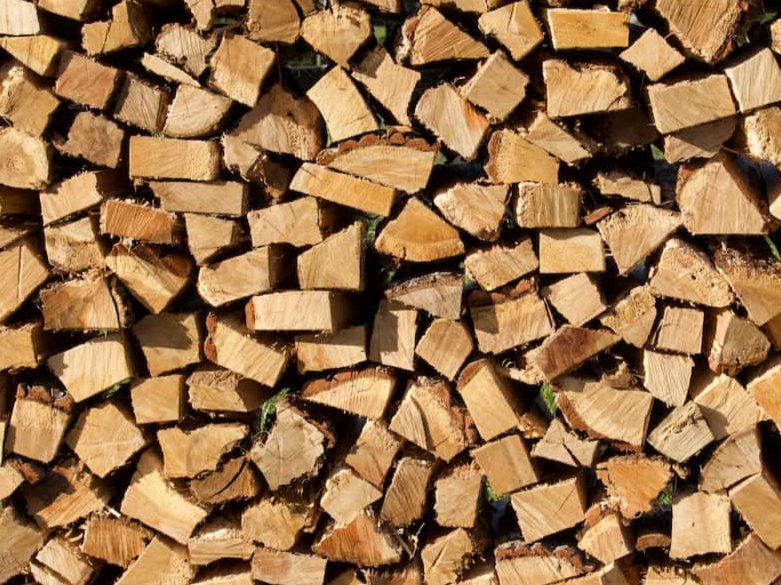
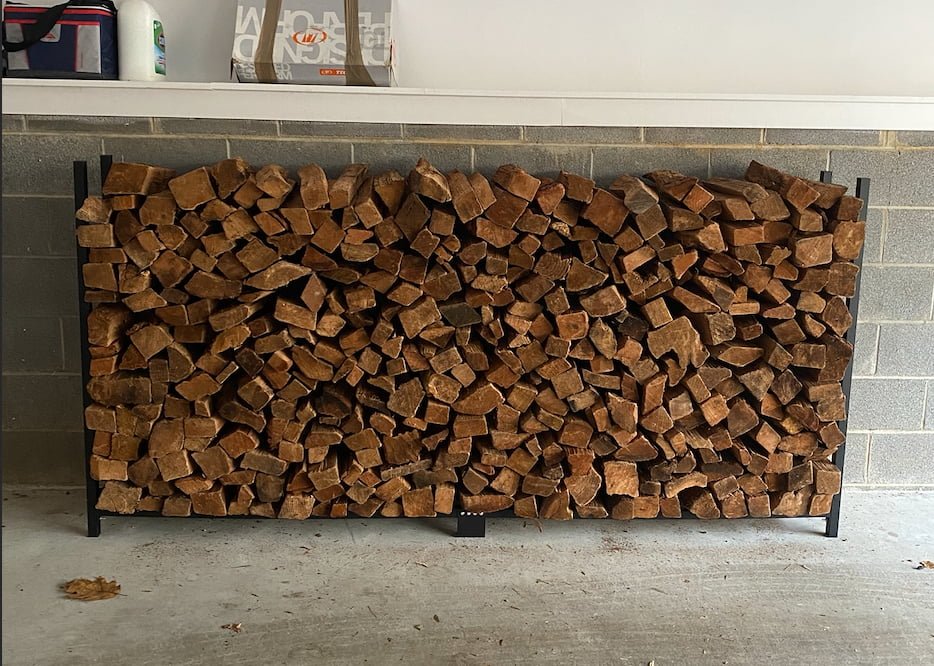
Highest sticker, least waste. A 4x8 stack from us (a third of a cord, about 80 fires) is $360 for Mixed Hardwoods or $420 for Oak, plus $25 to $60 delivery, stacked where you want it for a small add-on. Every log is dry enough to light on the first match and burn clean, nothing gets thrown out, nothing comes inside with bugs, and the chimney stays cleaner. Per fire that actually burns, it lands at roughly $5 and change, which is right alongside a "cheap" cord once you account for the wood in that cord that never lights.
The comparison, per fire
| Source | Sticker | What you really get | Best for |
|---|---|---|---|
| Free wood | $0 | A year of work, then good wood | People with a splitter and patience |
| Roadside cord | $150 to $350 | A third of a cord, dryness unknown | Outdoor fires, known sellers |
| Grocery bundle | $6 to $12 | One fire, often damp | Camping |
| Landscape yard | Fair per cord | Haul, unload, stack yourself | Truck owners with a dry shed |
| Delivered kiln-dried | $360 per 4x8 stack | Every log burns, stacked for you | Fireplaces, stoves, indoor storage |
So where should you buy?
If you have the gear, the space, and a year, buy free or by the cord from a yard and season it yourself. If you want fires this season with no work and no gamble, buy dry wood with the dimensions printed. That is what we sell, across Virginia, DC, Maryland, and North Carolina, and the firewood for sale page has the sizes. Whichever you choose, buy in September, not December; the when to order guide explains why.
Frequently asked questions
Where is the cheapest place to buy firewood?
On the sticker, a free Craigslist listing or a roadside truck load. Per fire that actually lights and burns clean, delivered kiln-dried wood by the stack is usually within a few dollars of a cheap cord and often ahead of it, because none of it is wasted on water, none is thrown out, and none of it ends up in your chimney.
Is free firewood worth it?
Sometimes, if you have a splitter, a truck, a year to season it, and a dry place to stack it. Free wood is almost always green rounds, which means a year of work and waiting before the first good fire.
Are grocery store bundles a bad deal?
Per cubic foot they are the most expensive firewood there is, often several dollars a log, and they are frequently damp. They make sense for one fire on a camping trip, not for a season.
Is it cheaper to buy firewood by the cord?
Per cubic foot, bigger is cheaper everywhere, including with us: a 4x16 stack costs less per fire than a 2x4. The catch with a "cord" from a roadside seller is that it is rarely a full cord and rarely dry, so the per-cord price is not what you are paying.
When is the cheapest time to buy firewood?
Late summer and early fall, before the first cold snap. Prices firm up and lead times stretch once everyone wants wood the same week. See our guide on when to order.
Clark started splitting and selling firewood on his family farm in Upperville, Virginia at age 11. Today Clark's Firewood delivers premium kiln-dried hardwood to homes across Virginia, Washington DC, Maryland, and North Carolina, and Clark personally guarantees every order.