How much firewood do I need?
A straight answer to the question I get more than any other, plus an easy way to match the right amount of firewood to how you actually burn.

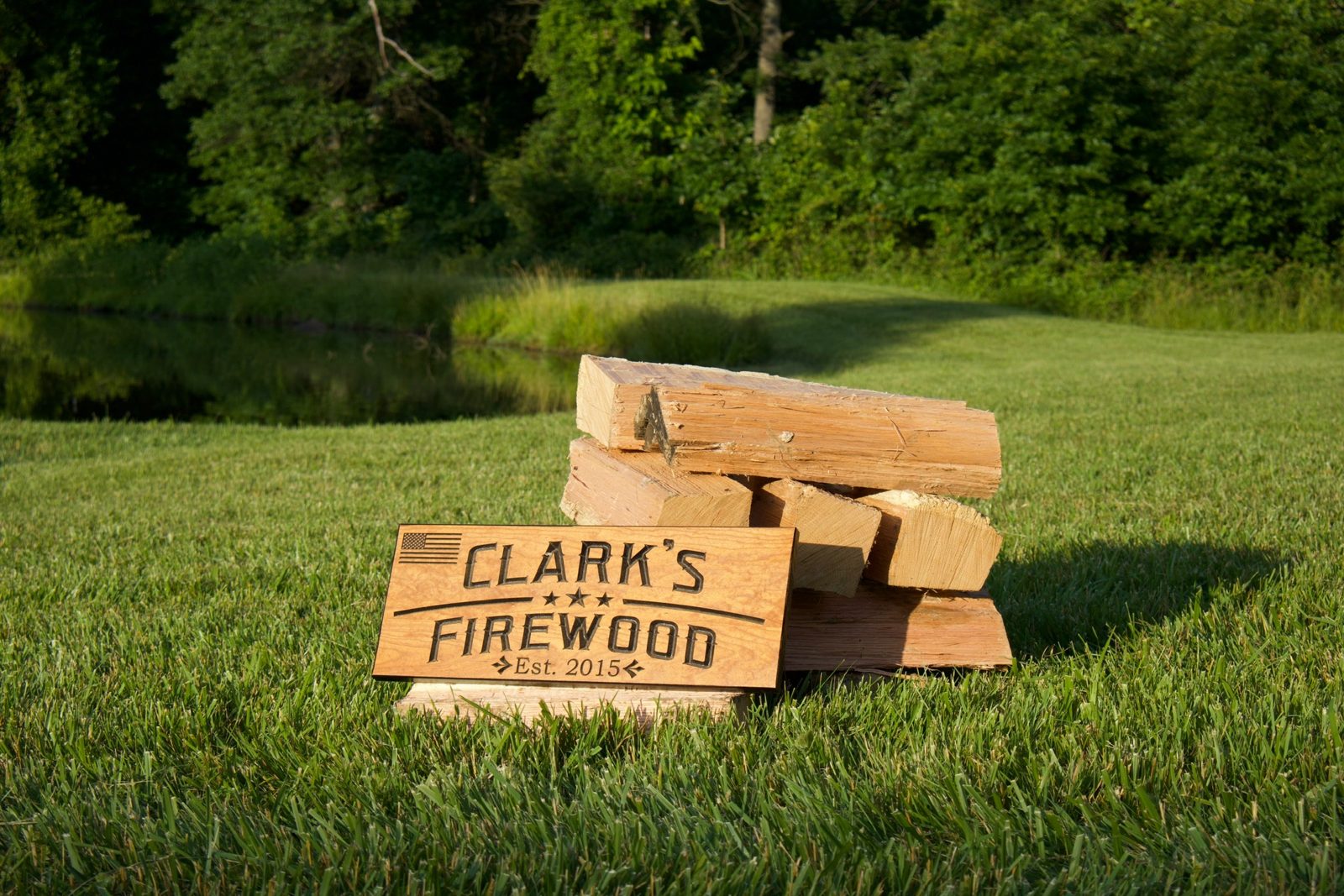
How much firewood do I need? It is the question I answer more than any other, and the honest answer is that most people need a lot less than they think, or a lot more, depending on how they burn. If you light the occasional weekend fire, a small stack lasts you a season. If wood is your main heat source, you are buying by the cord. The trick is matching the amount to your actual habits instead of guessing, and getting past the cords-versus-racks confusion that trips everyone up.
I have been selling firewood since I was 11, so I have sized a lot of orders. Here is the straightforward way to do it.
Short answer
Occasional weekend fires: a single stack or rack bundle gets you through the season. Regular weekly fires through fall and winter: plan on roughly half a cord to a full cord. Wood as your primary heat: you are in multiple-cord territory. A 2 ft x 4 ft stack lights about 20 fires, so count your fires and scale up from there.
First, the cords vs racks confusion
Almost every sizing mistake comes from mixing up these two words. They are not the same thing, and the gap between them is big.
What a cord actually is
A cord is the standard full unit of firewood: 4 ft high by 4 ft wide by 8 ft long, which works out to 128 cubic feet of tightly stacked wood. That is a serious volume. A full cord stacked up is about the size of a large pickup bed filled and then some. Most homeowners who light fires for ambiance never need a full cord in a season.
What a rack actually is
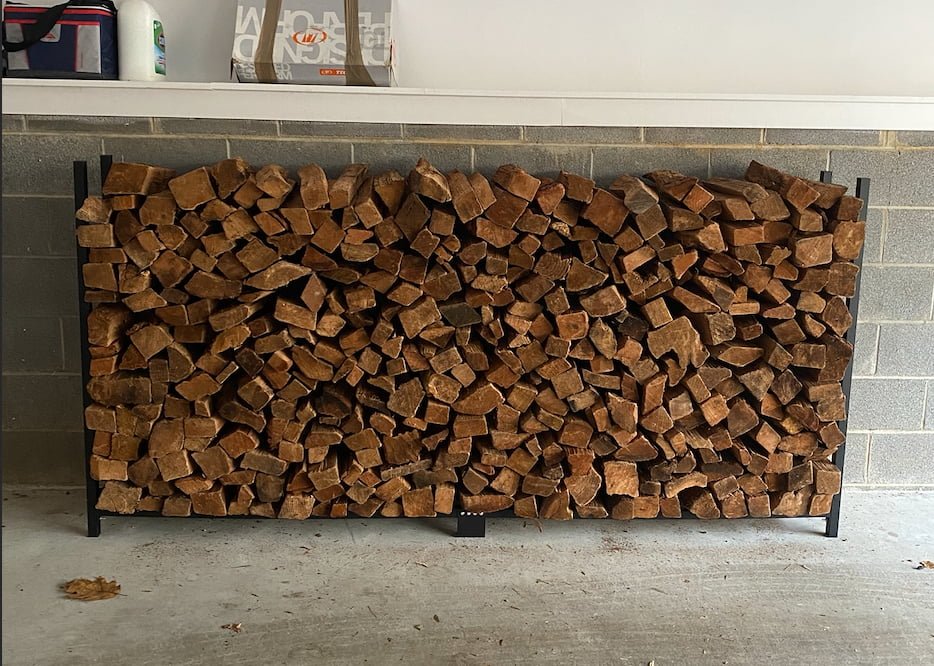
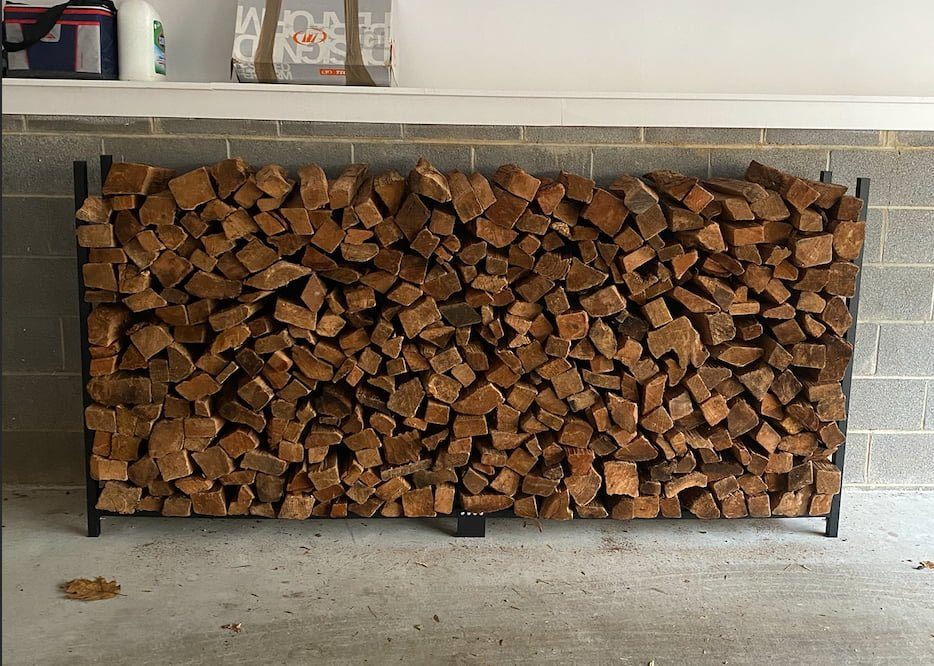
A rack (you will also see it called a face cord) is one row deep. We cut all of our wood to consistent 16-inch splits, so one full rack is 4 ft high by 8 ft long by 16 inches deep. That comes out to one-third of a cord. So three full racks equal one cord. If a seller quotes you a "rack" and you are picturing a cord, you are off by a factor of three. I wrote a fuller breakdown in our cord vs rack explainer if you want the deep version.
| Unit | Dimensions | Fraction of a cord |
|---|---|---|
| Full cord | 4 ft x 4 ft x 8 ft (128 cu ft) | 1 cord |
| Full rack (face cord) | 4 ft x 8 ft of 16-inch splits | 1/3 cord |
| Half rack | 4 ft x 4 ft of 16-inch splits | 1/6 cord |
| 2 ft x 4 ft stack | 2 ft x 4 ft of 16-inch splits | roughly 1/12 cord |
The easiest way to size it: count your fires
Cubic feet are hard to picture. Fires are not. So I size things by fires, and it works for almost everyone.
A 2 ft x 4 ft stack lights roughly 20 fires. That is the number to anchor on. A normal evening fire that you build, enjoy for a few hours, and let burn down uses a handful of splits. Twenty of those fires from one compact stack. From there the math scales cleanly:
- About 20 fires: a 2 ft x 4 ft stack
- About 40 fires: a 4 ft x 4 ft stack (a half rack)
- About 80 fires: a full rack, which is one-third of a cord
- About 240 fires: a full cord
Because kiln-dried wood lights fast and burns clean, you tend to use fewer splits per fire than you would with wood that fights you. Dry wood does more work, so your stack stretches further than you would expect.
Match the amount to how you burn
Occasional weekend fires
This is most of my customers. You light a fire on cold weekends, around the holidays, when company is over. You are burning for the feel of it, not for heat. A single stack or one of our rack bundles covers a full season comfortably, often with a little left over for next year. If you fire up once or twice a week from late fall through early spring, one full rack is a safe, generous amount.
Regular weekly burning
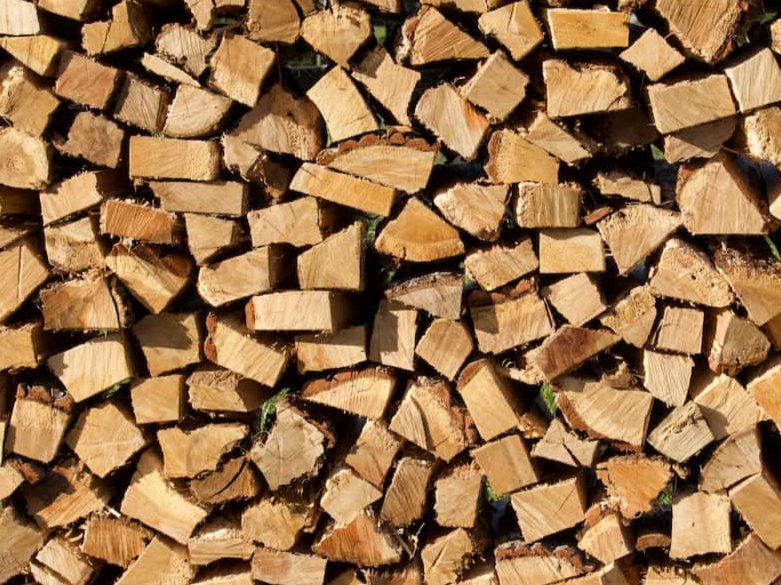
If a fire is part of your routine, several nights a week through the cold months, you burn through wood noticeably faster. Plan on somewhere between a half cord and a full cord for the season. A full cord is the sweet spot here: enough that you are not reordering in February, but not so much that storage becomes a project. Our Kiln-Dried Mixed Hardwoods are the right call for this kind of regular burning, since the cherry, hickory, maple, and oak blend gives you a clean, lively fire night after night.
Wood as your primary heat
If you are heating your home with a wood stove or insert and running it daily, you are in a different category entirely. Primary-heat households commonly go through multiple cords across a winter, and the exact number depends on your stove, your home, and how cold it gets. For pure heat output and long, slow burns, our Kiln-Dried 100% Oak is the workhorse: it carries the highest BTU of anything we sell and holds a coal bed for hours, which is exactly what you want when wood is doing the heavy lifting.
| How you burn | Fires per week (in season) | What to order |
|---|---|---|
| Occasional / weekend | 1 to 2 | A stack or full rack |
| Regular | 3 to 5 | Half cord to a full cord |
| Primary heat | Daily | Multiple cords |
How to estimate a whole season
If you want a number you can actually order against, here is the method I use with customers on the phone. It takes two minutes.
- Count fires per week. Be honest about your real habits, not your aspirational ones. Most weekend burners land at two to three.
- Count your weeks. A Mid-Atlantic burning season runs roughly from fall into early spring, so figure on about 16 to 20 weeks of fires.
- Multiply for total fires. Three fires a week across 18 weeks is about 54 fires.
- Convert to stacks. Divide your total fires by 20. That tells you how many 2 ft x 4 ft stacks you need. Around 54 fires is roughly three stacks, or about three-quarters of a full rack.
- Round up and add a cushion. Running out in the middle of a cold snap is the worst feeling. I always tell people to round up to the next clean size so they have a buffer.
How our stack sizes map to your needs
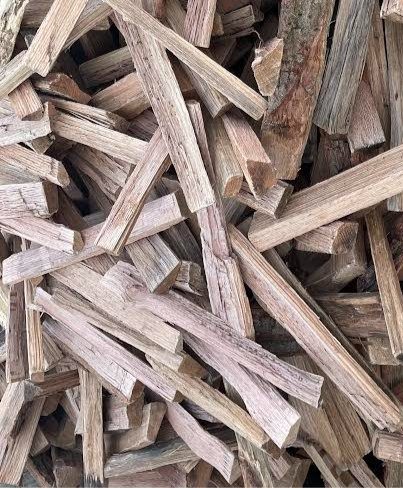
We sell by the stack so the amounts stay easy to picture and easy to store. A rack bundle is the go-to for weekend burners, and our firewood box with kiln-dried wood is a tidy option for smaller spaces, balconies, or as a clean indoor supply. Add Simple Start kindling with any order and getting a fire going stops being a chore. For regular and primary-heat customers, full racks and full cords are the right unit, and we can add optional stacking so you are not the one hauling it into place.
A quick note on storage
Buying the right amount also means having somewhere to put it. The good news with kiln-dried wood is that it is already dry, so storage is about keeping it dry, not drying it out. Keep your wood up off the ground, covered on top, and open on the sides so air moves through it. Because the wood comes in low in moisture, on average under 12 percent, it is clean enough to keep a stack or box indoors near the hearth without dragging bugs and mold inside. A small indoor supply plus your main stack outside is the setup I recommend most.
Still not sure? Just ask
If you tell me roughly how often you light a fire, I can tell you exactly what to order. No guessing, no overbuying. When you are ready, browse the full lineup and order online, or call me directly at (571) 348-6009. I personally stand behind every order that goes out.
Frequently asked questions
How many fires does a stack of firewood light?
A 2 ft x 4 ft stack of our 16-inch kiln-dried splits lights roughly 20 fires. Scale up from there: a half rack is about 40 fires, a full rack about 80, and a full cord around 240. Counting fires is the easiest way to size your order.
What is the difference between a cord and a rack of firewood?
A cord is the full unit: 4 ft x 4 ft x 8 ft, or 128 cubic feet. A rack (also called a face cord) is one row deep. With our 16-inch splits, a full rack equals one-third of a cord, so three racks make a cord. Mixing up the two is the most common firewood sizing mistake.
How much firewood do I need for occasional weekend fires?
For the occasional weekend or holiday fire, a single stack or one rack bundle comfortably covers a full season, often with some left over for next year. If you burn once or twice a week through the cold months, a full rack is a safe, generous amount.
How much firewood do I need if I heat my home with wood?
If wood is your primary heat and you run a stove or insert daily, you are in multiple-cord territory for a winter. The exact amount depends on your stove, your home, and the weather. For maximum heat and long burns, our Kiln-Dried 100% Oak is the right pick.
How do I estimate firewood for a whole season?
Count your fires per week, multiply by your number of burning weeks (roughly 16 to 20 in our region), then divide the total by 20 to get the number of 2 ft x 4 ft stacks you need. Round up and add a cushion so you do not run out during a cold snap.
Does kiln-dried firewood last longer than other wood?
You tend to use fewer splits per fire with kiln-dried wood because it lights fast and burns efficiently rather than smoldering. Coming in low in moisture, on average under 12 percent, it does more work per split, so a given amount stretches further than damp wood would.
Can I store firewood indoors?
Yes. Because our wood is kiln-dried and comes in clean and low in moisture, it is well suited to indoor storage near the hearth without the bug and mold concerns of wet wood. Keep your main supply outside, off the ground and covered on top, with a small indoor stack or firewood box for convenience.
Clark started splitting and selling firewood on his family farm in Upperville, Virginia at age 11. Today Clark's Firewood delivers premium kiln-dried hardwood to homes across Virginia, Washington DC, Maryland, and North Carolina, and Clark personally guarantees every order.