Cords, racks, and stacks explained
A cord is the one firewood unit with a single, official definition, while "face cord," "rick," and "rack" can mean wildly different amounts. Here is how to read every term and compare sellers fairly before you buy.

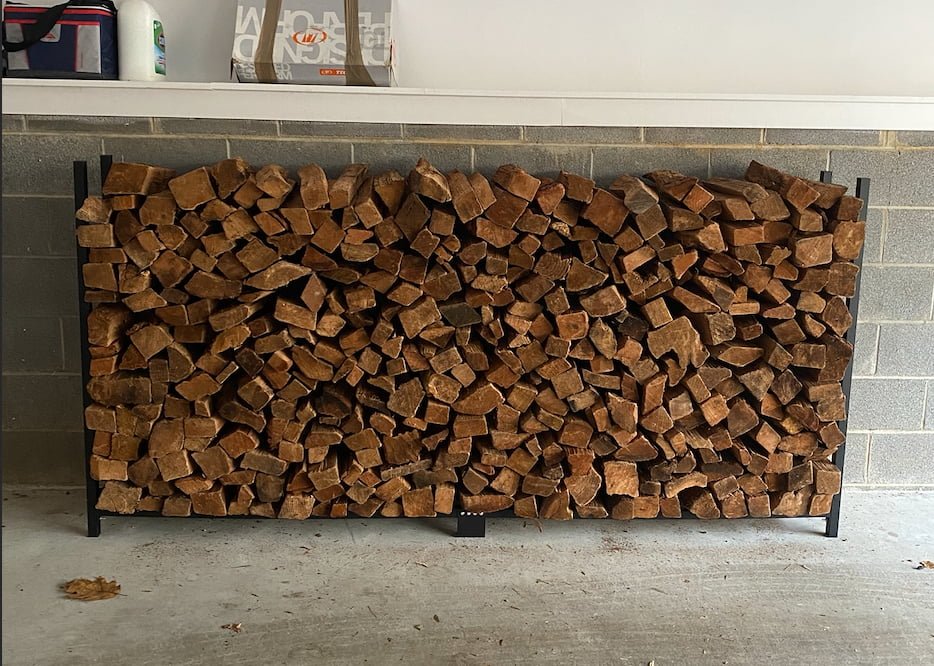
A cord is the one firewood unit with a single, agreed definition: 128 cubic feet of stacked wood, measuring 4 feet by 4 feet by 8 feet. A rack (also called a face cord or rick) is a single row stacked 4 feet high and 8 feet long, with the depth set by your log length, so it is roughly a fraction of a cord rather than a fixed amount. That difference is exactly why two firewood ads can look identical on price and mean completely different quantities.
I am Clark, and I have been selling firewood since I was 11. The single biggest source of confusion my customers run into is units. So let me clear it up once, plainly, so you can order with confidence and compare any two sellers apples to apples.
Short answer
A cord is a fixed 128 cubic feet (4 ft x 4 ft x 8 ft). A face cord, rick, or rack is one stacked row 4 ft high by 8 ft long, and its true volume depends entirely on how long the logs are. With our standard 16-inch splits, one rack equals about one-third of a cord. When you compare prices, compare volume in cubic feet or compare full cords, never just the word "cord" in an ad.
What a cord actually is
A full cord is the standard measure used to sell firewood across most of the country. It is 128 cubic feet of tightly stacked wood. The classic shape people picture is 4 feet wide, 4 feet deep, and 8 feet long: multiply those out and you get 128 cubic feet.
The shape can change as long as the math holds. A stack 2 feet deep, 4 feet high, and 16 feet long is still a full cord. What matters is the total stacked volume, not the exact footprint. Because a cord has one agreed meaning, it is the safest unit to anchor on when you are price shopping.
- Full cord: 128 cubic feet, the standard benchmark
- Half cord: 64 cubic feet
- Quarter cord: 32 cubic feet
Face cord, rick, and rack: why they are ambiguous
Here is where buyers get burned. A face cord is a stack that is 4 feet high and 8 feet long, which is the front "face" of a full cord. But the depth of that stack is just one log deep, and log length is not standardized. One seller's face cord might be 12-inch logs; another's might be 24-inch logs. Same height, same length, very different amount of actual wood.
The terms rick and rack are regional words for the same idea, and none of them carry the fixed meaning a cord does. Depending on log length, a face cord can land anywhere from roughly a quarter of a cord to two-thirds of a cord. That is a huge spread, and it is exactly why a "great deal" on a face cord can quietly be the worst deal on the page.
The fix is simple: never accept a face cord, rick, or rack price without asking one question first, which is how long the logs are. Log length tells you the real volume.
How we use rack and stack
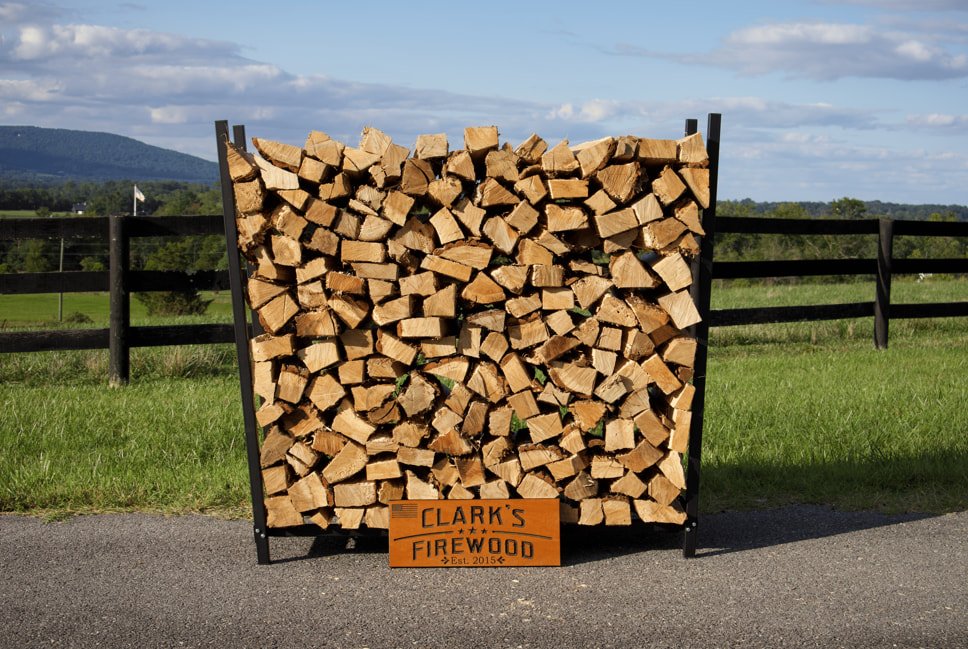
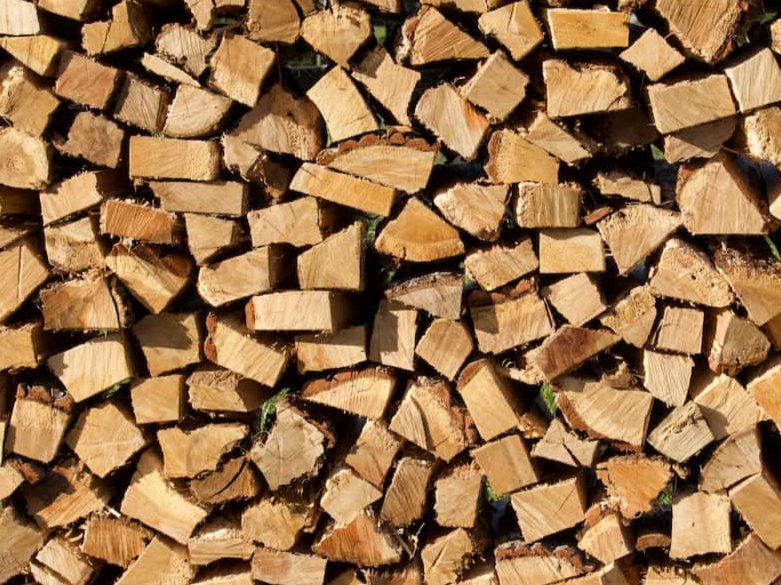
I do not want my customers guessing, so we keep our units consistent and tied to a fixed log length. Every split we deliver is cut to a consistent 16-inch length. That one decision removes the ambiguity baked into the word "rack."
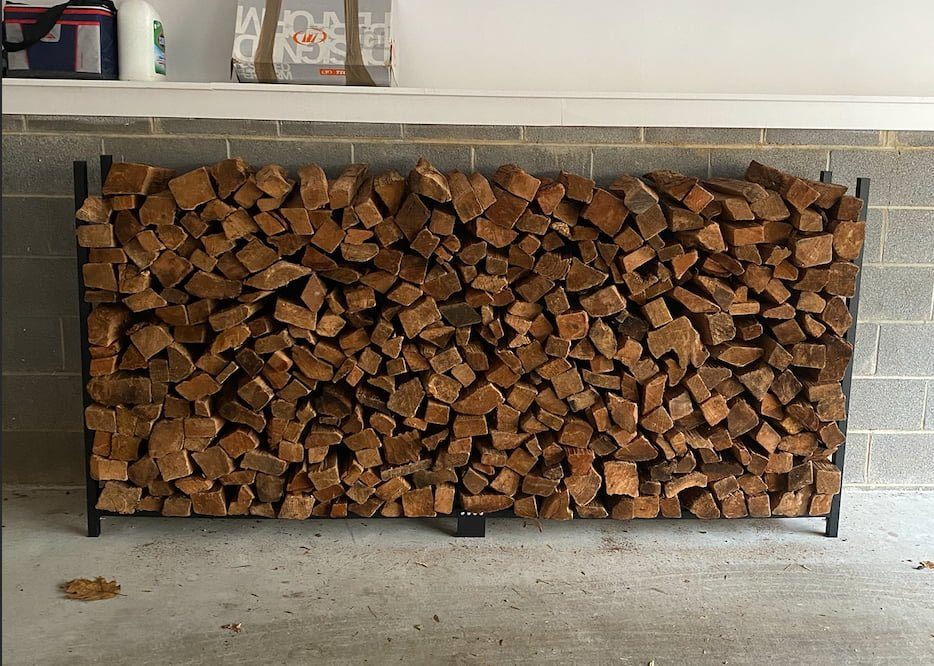
- One full rack = 4 ft x 8 ft of our 16-inch splits = one-third of a cord (about 42 cubic feet)
- We sell by the stack so you can order the exact amount you burn without committing to a full cord
- Three full racks = one full cord, since each rack is a third
Because our log length is fixed at 16 inches, our rack means the same thing every single time you order. There is no fine print on depth, because the depth is always 16 inches. If you want the full walkthrough on matching a quantity to your actual usage, our guide on how much firewood you need maps it out step by step.
Dimensions comparison table
Here is every common term side by side, so you can translate any seller's listing into cubic feet and into cords.
| Unit | Typical dimensions | Approx. volume | Fraction of a full cord |
|---|---|---|---|
| Full cord | 4 ft x 4 ft x 8 ft | 128 cubic feet | 1 (the standard) |
| Half cord | 4 ft x 2 ft x 8 ft | 64 cubic feet | 1/2 |
| Quarter cord | 4 ft x 1 ft x 8 ft | 32 cubic feet | 1/4 |
| Face cord / rick / rack (varies) | 4 ft x 8 ft x log length | Depends on log length | Roughly 1/4 to 2/3 |
| Our rack (16-inch splits) | 4 ft x 8 ft x 16 in | About 42 cubic feet | 1/3 |
The takeaway from this table is the bottom two rows. A generic face cord is a moving target. Our rack is locked to 16 inches, so it is always one-third of a cord.
How our stack sizes map to fire counts
Cubic feet are precise, but most people do not think in cubic feet, they think in fires. So I also frame our stacks by how many fires they tend to light. This is the fastest way to pick a size if you just want to know whether a stack will get you through the season.
As a working baseline, a 2 ft x 4 ft stack of our 16-inch splits lights roughly 20 fires. From there you scale up. The exact number depends on how long you burn each fire and how hot you run it, but it is a reliable starting point for planning.
- 2 ft x 4 ft stack: about 20 fires, good for occasional weekend fires
- Full rack (1/3 cord): several times that, a solid choice for a regular burner
- Full cord: three racks, for heavy users or a long, cold season
If you are between two sizes, size up. Kiln-dried wood stores cleanly and safely indoors, so leftover wood is not a problem, it is next month's fires.
How to compare sellers apples to apples
Once you understand the units, smart shopping is easy. Run every quote through the same three checks before you decide.
- Convert to cubic feet or to cords. Ignore marketing words and reduce every offer to a number you can compare. Price per cubic foot is the cleanest yardstick.
- Confirm log length. A cheap face cord with short logs can cost more per cubic foot than a fairly priced full cord. Length changes everything.
- Account for wood quality and moisture. A cord of wet, green wood is not the same value as a cord of properly dried wood, even at the same price. Our wood is kiln-dried to low moisture, on average under 12 percent, so it lights easily and burns clean. You are not paying to boil off water before you get heat.
That third point matters more than people expect. Two cords can be identical in volume and priced the same, yet burn nothing alike. Dry wood is the product you actually want. Wet wood is mostly a hauling fee for water.
Bottom line
Anchor on the cord, because it is the only unit with one fixed meaning. Treat "face cord," "rick," and "rack" as questions, not answers, until you know the log length behind them. With us there is nothing to decode: our splits are a consistent 16 inches, a rack is always one-third of a cord, and you order by the stack in whatever amount fits your home.
If you know how much you want, you can see our firewood and order by the stack in a couple of minutes, and every order is kiln-dried, hand-selected, and personally guaranteed by me. Questions on sizing for your specific setup? Call or text (571) 348-6009 and we will get you the right amount the first time.
Frequently asked questions
Is a rack of wood the same as a cord?
No. A full cord is a fixed 128 cubic feet (4 ft x 4 ft x 8 ft). A rack, also called a face cord or rick, is a single stacked row 4 ft high and 8 ft long, with depth set by log length. With our consistent 16-inch splits, one rack equals about one-third of a cord.
How many racks are in a cord?
With our 16-inch splits, three full racks make one full cord, because each rack is one-third of a cord. If another seller uses a different log length, their rack-to-cord ratio will be different, which is why you should always confirm log length.
What is a face cord and why is it confusing?
A face cord is a stack 4 ft high and 8 ft long that is only one log deep. Because log length is not standardized, the depth and therefore the real volume can vary a lot. The same listed face cord can be anywhere from roughly a quarter to two-thirds of a full cord depending on how long the logs are cut.
What is the difference between a rick and a rack of wood?
Rick and rack are regional words for the same thing, a face cord. Neither carries the fixed meaning a cord does. Both describe a 4 ft by 8 ft stacked row whose volume depends on log length, so always ask for the log length before comparing prices.
How do I compare firewood prices fairly between sellers?
Convert every quote to cubic feet or to full cords, confirm the log length behind any face cord or rack, and factor in moisture and quality. Price per cubic foot of properly dried wood is the cleanest way to compare apples to apples.
How many fires does a stack of firewood light?
As a baseline, a 2 ft x 4 ft stack of our 16-inch splits lights roughly 20 fires, and you scale up from there. The exact number depends on how long and how hot you burn, but it is a reliable starting point for planning a season.
What size firewood order should I get?
If you burn occasionally, a small stack or a single rack is plenty. Regular burners do well with a full rack or more, and heavy users or long winters often want a full cord (three racks). When in doubt, size up, since kiln-dried wood stores cleanly indoors.
Clark started splitting and selling firewood on his family farm in Upperville, Virginia at age 11. Today Clark's Firewood delivers premium kiln-dried hardwood to homes across Virginia, Washington DC, Maryland, and North Carolina, and Clark personally guarantees every order.